How to translate subtitles without turning the workflow into a mess
A practical subtitle translation workflow from upload to download, with notes on what to clean, what to review, and what to leave alone.
Workflow
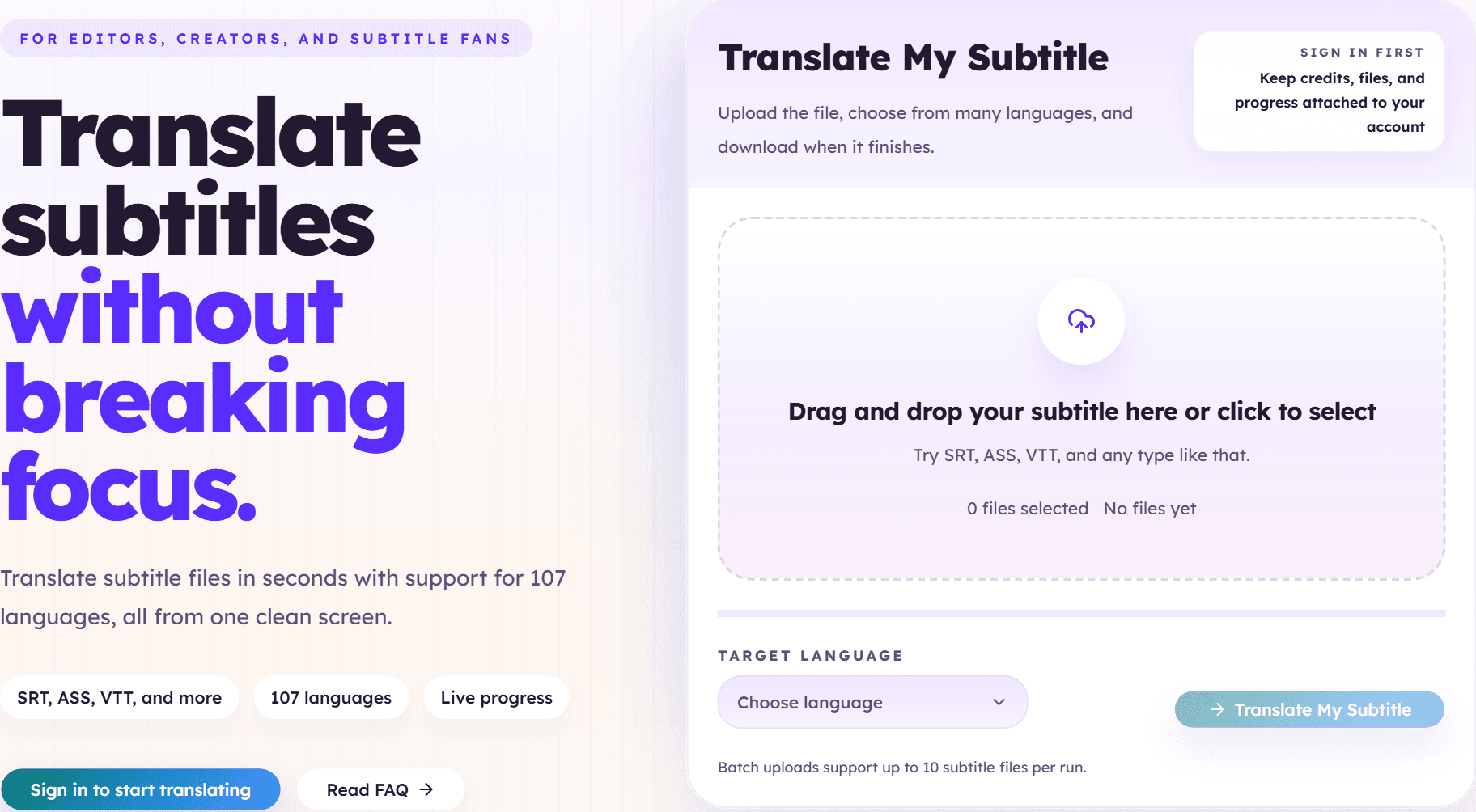
A practical subtitle translation workflow from upload to download, with notes on what to clean, what to review, and what to leave alone.
Workflow
The fastest subtitle workflow is usually not the most complicated one. Start with the translation pass, review the result, and only then decide if the file needs cleanup, timing shifts, bilingual output, or format conversion.
Key takeaways
People often overbuild subtitle workflows before the first translated line even appears. They open a converter, then a cleaner, then an editor, and only later reach the one job they were actually trying to finish: getting the subtitle into another language.
That is backwards for most real subtitle work.
If the file is already readable as a subtitle file, start with the translation pass. The goal is to understand whether the translation itself is acceptable before you spend time on optional cleanup and polish.
Translation workflow

You do not need a heavy checklist, but you should still confirm a few practical things:
If those basics are fine, run the translation first.
Once the translated file is ready, read a few sections as subtitles, not as plain text.
That means checking:
If the translation already reads well enough, you may be done right there. That is the win most people forget to allow for.
After the translation pass, the next tool should be chosen because the file clearly needs it:
That order keeps the workflow readable.
Next step
If the subtitle file is already usable, translate it first and decide on the second tool only after the first result is in front of you.
Open subtitle translator